It doesn’t appear to have affected many, or any, of the under 16s, I have spoken to.
Big data, like Facebook, are, of course, using facial recognition, so lots of data being gleaned in that way. But, on the other hand, it doesn’t appear to be keeping many, under 16s, off the Social Media platforms.
But that is interesting. big-parental-controls would override Australian Law, which assumes 16 year olds are mature enough to go Full Internet.
The OPTION will be implemented, it maybe the default on new installs but not exactly difficult to disable.
It’s important to be READY, also to have a path of RESISTANCE. Outright denial isn’t really a strategy, it’s simply burying your head in the sand I think.
Also, if you’re going to age-restrict a multi-user operating system by installing only an age-restricting browser, then you’re crippling the system for all other user accounts on the system.
And if you install regular browsers, then who’s going to say that the minor will be using the age-restricted browser?
This is why the whole idea of age-restricting or age-verifying at the operating system level is ludicrously stupid, and conceived by people who do not understand a thing about operating systems.
I remember a time when Free Software was genuinely Free (as in “freedom”)…
In fact, what the Brazilian Law looks more like, is a requirement for Operating Systems to provide functioning Parental Controls. Not unlike what BigLinux has actually provided. I cloned the Git repo, to have a good look at the Python code… yes, it’s written in Python.
I actually agree with Parental Controls, and I believe I commented such, when commenting on the Brazillian Law, a little while back.
Parents should be able to exercise full control over how their children use computing devices.
The idea isn’t stupid, but it is poorly considered and without nuance - and the implementation is proving far more complicated than they possibly imagined, and - like sanctions on Iran, more people will just step over any boundaries than be stopped by them.
Maybe we should see this as a very useful ‘idiot filter’
In the end, I can only see it gaining any traction in the big name OS’s… so just pray that this year might (once again) not qualify for ‘The Year of the Linux Desktop’.
That’s no use. The day you create the perfect idiot filter is the day right before the universe creates an even bigger idiot. And if there’s one thing I’ve learned in my mortal existence, then it’s that there’s no shortage of those on this planet.
It is clearly aimed at commercial operating systems, because those are the only ones politicians know of.
This whole thing reminds me of when Microsoft under Steve Ballmer started spreading the FUD that GNU/Linux contained a myriad of Microsoft patents and copyrights, but without providing even the remotest shred of evidence that it was so.
And then, rather than calling out Ballmer on his bluff, SuSE signed a so-called “interoperability agreement” with Microsoft, which in practice meant a non-litigation arrangement.
Microsoft then profiled this in the mainstream media as a tacit admission from SuSE that GNU/Linux would indeed contain Microsoft “Intellectual Property™”, with as a result that a whole bunch of other and smaller distributions also approached Microsoft about a non-litigation agreement.
The FUD had done its work, and now everyone in the GNU/Linux ecosystem was afraid of being dragged to court by Microsoft over an as yet unidentified and in reality non-existing violation of copyrights and patents, all because no one dared call out Microsoft on their bovine excrement.
In my opinion, this knee-jerk acquiescence from the various distributions to the unrealistic technical demands of these ludicrous laws is no different. Rather than object on the grounds of the stupidity behind the formulation of this law, people are bending over and giving the lawmaking idiots free reign, instead of reigning in their stupidity.
In order to ignore something, you have to object to it first. And apparently Someone Who Shall Remain Unnamed™ doesn’t have the nerve to reject it.
We’ve already witnessed the same thing happening right here in Manjaro with the mesa codecs, just because the Someone Who Shall Remain Unnamed™ had heard from a RedHat-associated lawyer that including those codecs was a patent violation and actionable in court.
Only, software patents have no legal value within the EU, and thus Manjaro was never in any danger of litigation. It took several of us on the Team — yours truly included — to get the mesa package in Manjaro restored from its crippleware status.
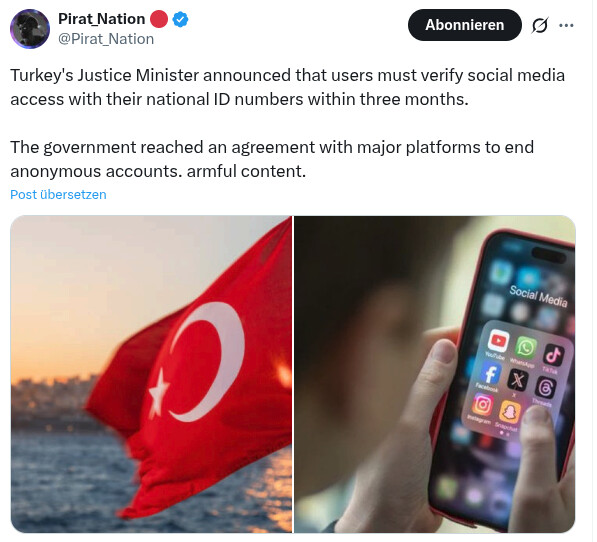
I think we all know what this is really about, and none of us believes that corrupt politicians, this whole gang of p€dophile$, care about the well-being and safety of children. Digital identity, social credit points, and above all, the ability to quickly identify and punish anyone who dares to write about obvious things are the main goals of this “trojan horse”
Are we forgetting that the kids are born to their parents, and not in government’s factories?
Why aren’t government making rules for parents to monitor their non-adult kids properly and otherwise get punished under law than - putting a mass surveillance on every device with an OS…
I understand that some parts of the world have leaders with ego and motives to do unethical stuff like mass surveillance, but are the rest of the governments just equally dumb?
Since ancient times, kids were taken care by parents not King’s soldiers and rules, that’s for a reason - this doesn’t work.
Unfortunately, Crapple has proven how convenient verification at OS level vs Service based is.
In UK specifically, it is -yet- not mandatory. Their implementation seems to be the least intrusive one though.
I can see now why it makes sense for Apple/Google and MS to implement it at OS level, as for them it’s basically just a platform to sell their services and they would have to implement verification in every single one - AppStores included.
Legal note: Compliance with ECA Digital requires a responsible adult to perform the initial configuration. The software provides the tools; the legal obligation belongs to the person who sets up the computer for a child. This is the same model used by dedicated hardware devices (parental routers, smart TVs, set-top boxes) — the manufacturer supplies the controls; the adult is responsible for activating them.
So just putting this here to explain ‘implementing age verification’. The language is confusing, because in my opinion ‘implementing age verification’ means that you must put something in the software which will absolutely verify the age… and as such the manure piles up ever higher and higher until you actually look into what’s being implemented.
Wisconsin Governor Evers called the bill “an intrusion into the privacy of Wisconsin residents” and noted issues with data privacy and interference with the right to access constitutionally protected content
Everyone talking about the EU regulations, Australia (which may be a problem at some point). California, Colorado, etc. are ignoring the larger problem. Have you looked at the New York law? It requires you scan and send GOVERNMENT ID for each user, and provide additional IP information. How likely is THAT not to be misused? How many juveniles have Government ID? And how good is the record of States keeping such information secure? THIS is the larger problem! If such a requirement becomes general, I am going back to using FreeDOS and KolibriOS! (No user accounts) There is where the discussion should really focus. (I believe something like it has been proposed in the UK, but I am unsure if it has been implemented. I hope not.