I can assure you that this has changed, given my experiences of the past week — see this thread.
Everything is still under development, or else it would be obsolete. 
Again, see this thread. which will tell you how the only ext4 partition I had — but alas it was also a very important one, because it held the kernel and grub — got damaged, either by a process with a broken pipe, or by the fact that I gave it a filesystem label with gparted. I wouldn’t call that “rock solid”. 
btrfs on the other hand has already survived several unexpected power outages here without any damage at all, because it is self-healing.
Well, that’s an interesting point, because even though virtually everyone here uses btrfs for its ability to make snapshots, I don’t use snapshots, and I even doubt whether I would be able to create any usable filesystem rollback setup without much tinkering.
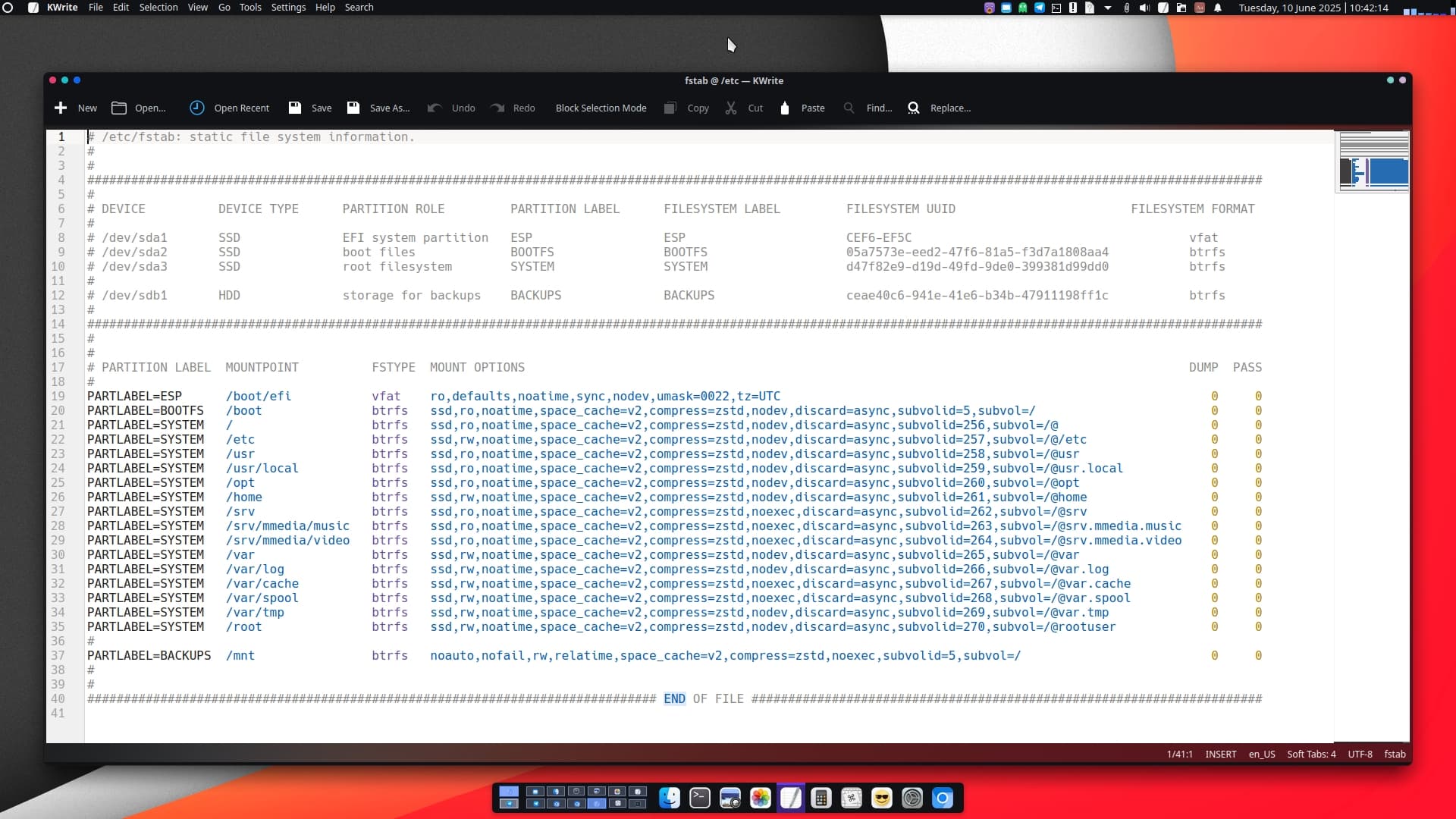
I prefer real, physical backups on a separate medium — with timeshift, indeed — and I am using btrfs for very different reasons, i.e. because it uses B-trees, because it’s copy-on-write, because it supports transparent inline compression, because it maintains checksums on both the metadata and the data, and because it has subvolumes which largely behave as independent partitions — with their own specific mount options — while they still share the total amount of free space with the other subvolumes on the device.
I’ll spare you the left-and-right scrolling and instead show you my /etc/fstab as a screenshot. Then you can see for yourself what I’m talking about.