I searched the forum but did not see any posts regarding this;
I have many times messed things up on my test machines and have generally been able to get back into the system prompt and fix my issues and move on. But what seems simple to me is not the case for the novice or even more seasoned user.
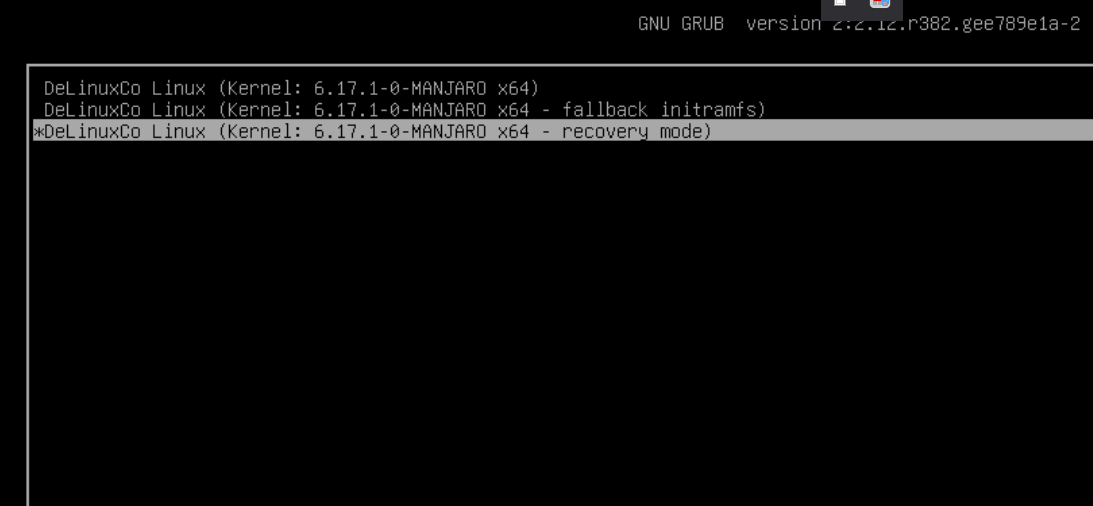
I propose that a “SAFE MODE” entry be added to the Grub menu, by duplicating the GRUB_CMDLINE_LINUX_DEFAULT= and adding a space and the number 3 at the end, this will take the user directly to runlevel 3, or the command prompt. From here the user can access the system sans a gui but generally fix just about anything. This is much easier than having to boot into an ISO and then chroot into the existing system, the latter being a last resort.
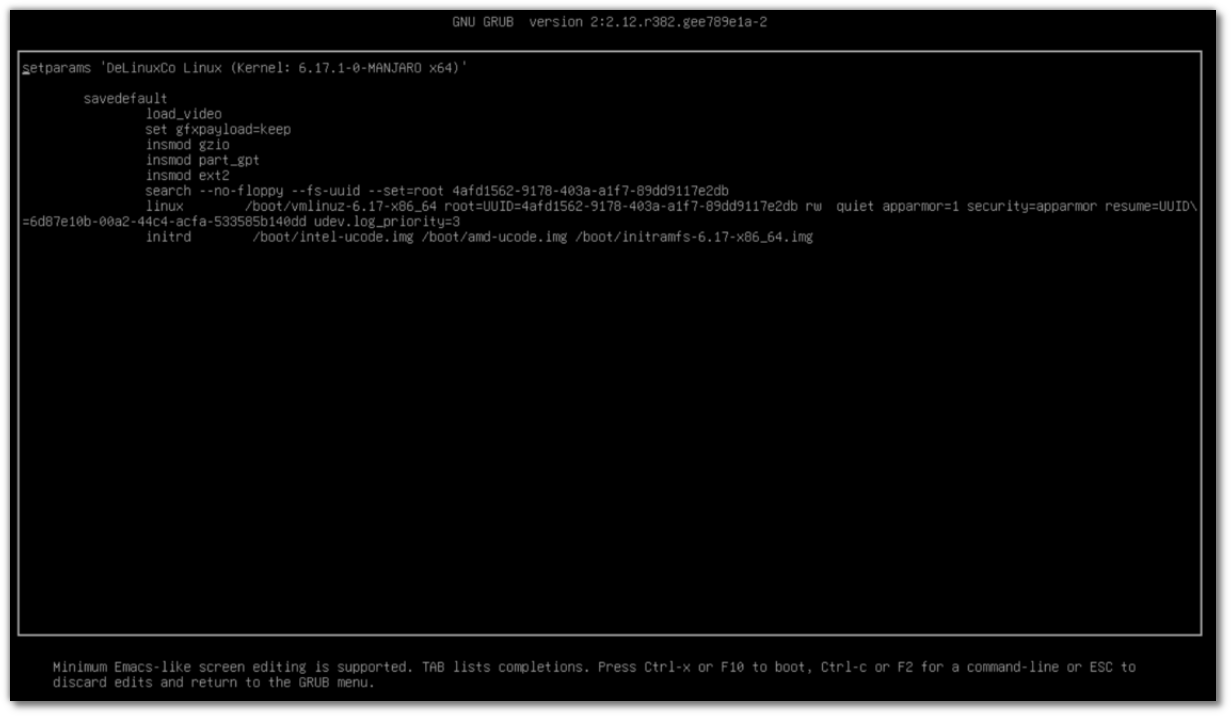
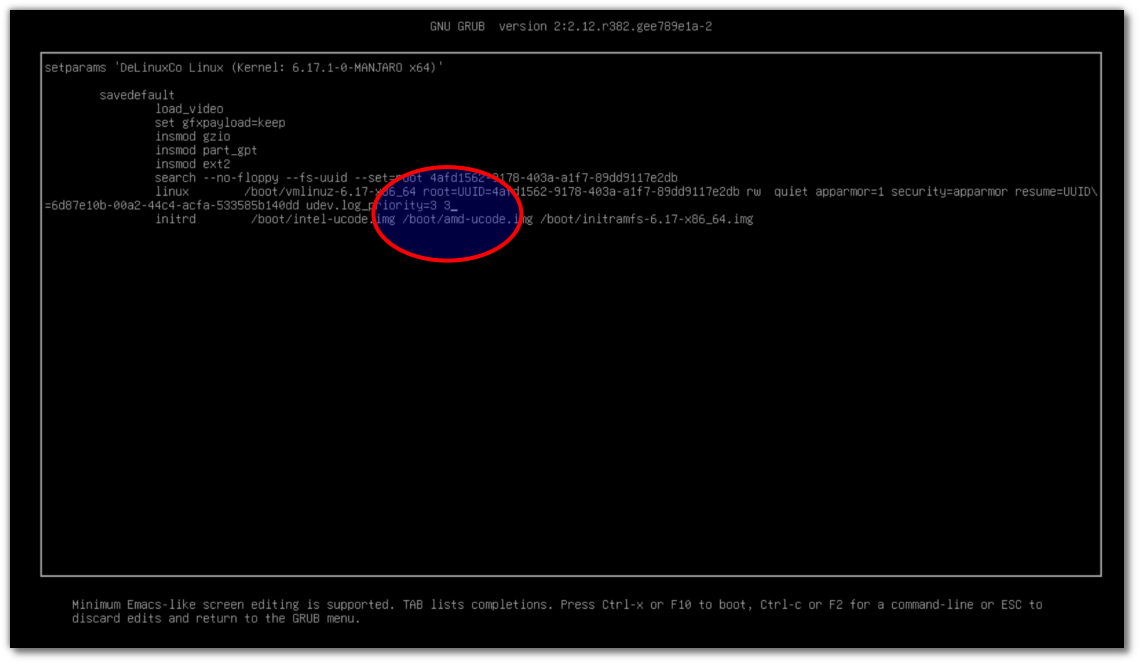
For those not familiar with the process, at the Grub menu, go to Advanced Options > then select one of the kernels and hit the letter “e” on the keyboard.
This will show the parameters of the kernel and all you have to do is arrow down to the “linux” line and arrow to the end, add a space and the number 3, then just hit F10 and it will take you to the command prompt with no X session.
With a “SAFE MODE” entry there, any user could get to the command prompt in seconds and effortlessly.
I actually considered adding it to my ISO, but it would probably just get overwritten sometime in the future. I think this would be best to be Manjaro effort, not just s little Spin effort.
Looking forward to your thoughts.
John
2 Likes
Sometimes. Maybe most of the time, but not always.
As evidenced here - yesterday:
Boot to black screen with dual boot, even with latest gnome image - #9 by Nachlese
It is not really a safe mode like that name would suggest.
In /etc/default/grub there is an entry:
#’ Uncomment to disable generation of recovery mode menu entries
GRUB_DISABLE_RECOVERY=true
Is this what you want?
(change to ==> # GRUB_DISABLE_RECOVERY=true
safe it and do “sudo update-grub”)
1 Like
Probably not.
It doesn’t have the intended effect.
What it would do is:
NOT creating a menu entry from which you can elect to boot the second initrd (the “fallback” initramfs).
One couldn’t easily try to boot that second initrd anymore as a result.
That second (fallback) initramfs is one which would also simply boot the system up to the graphical user interface.
It would not just boot to a TTY - which was apparently the goal with adding the “3” to the end of the grub command line.
@anon33601770 You are correct, it should be something like “COMMAND PROMPT”.
1 Like
Hi @GaVenga no, I think I may have over complicated it, its just a extra Grub menu item that takes the user to a command prompt.
@GaVenga @nikgnomic
Apparently commentating out GRUB_DISABLE_RECOVERY is what I was looking for.
I added the line “ GRUB_CMDLINE_LINUX_RECOVERY= to my test vm with the modified entries and ran sudo update-grub and everything worked as expected.
After getting to the command prompt and the system rebooted into the X session.
Can we get this proposal to the Manjaro team?
I also changed the title of the thread to better reflect the topic.
When using refind as the initial boot manager to chainload GRUB, there is a convenient option to boot the kernel stub directly, which allows one to bypass GRUB completely and carry out repairs as needed, in relative comfort.
Now, I know you’re aware of this, so I won’t go into further detail about refind…
However, if we had that functionality too – perhaps as a separate *.efi file installed alongside the grubx64.efi to provide the option – that could potentially give the same convenience.
Naturally, “someone” would need to create the logic and code.
Another profound idea is edible paper – use it, eat it – no waste…
2 Likes
Oh wow, I have not touched rEFInd in a long time.
But I was hoping to have Manjaro have this as part of the base since it is something that would benefit the whole community.
Yes, that is what I was suggesting – refind has it, but if Manjaro had that option as well; as a standalone option (perhaps launchable via the grub efi implementation) then refind would not be needed.
Consider it a thought experiment, unless there may be someone reading who could actually implement it. 
1 Like